I. INTRODUCTION: Trivia
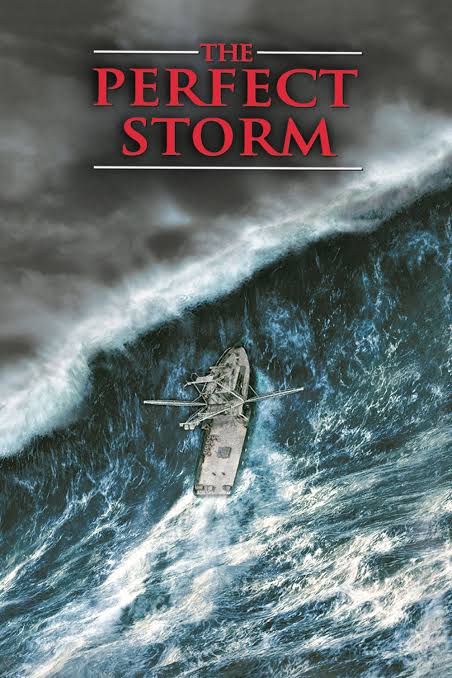
Perfect storm is based on a true story of a merging tropical storm that puts them in a mortal danger and crushed sword-fishing boat called Andrea Gail.
•None of the fish in the movie were real because the director of the movie, Wolfrang Petersen os an animal rights supporter.

•James Horner is also a composer of the movie called Titanic. He won the Grammy Award for Song of the year.

II. CAST OF CHARACTERS & DIRECTOR
•George Clooney known as Captain Frank William “Billy” Tyne Jr.

•Mark Wahlberg known as Robert “Bobby” Shatford. A flax-brown haired with a sinewy build that has seen a ton of work. He is the least experienced crew of the Andrea Gail.

•Mary Elizabeth Mastrantonio known as Linda Greenlaw
an intelligent captain of Hannah Boden, who maintains a friendly rivalry to Billy.
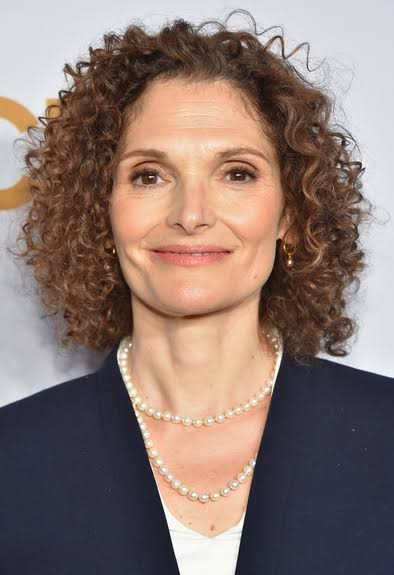
•Diane Lane known as Christina “Chris” Cotter
an attractive woman in her early forties with rust-blonde hair and narrow face. She is the sweetheart and inevitably turned into Bobby’s loving fiancé.

•John C. Reilly known as Dale “Murph” Murphy
a huge guy, and a crew member of Andrea Gail.

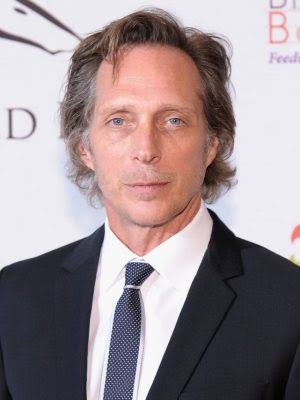
•William Fichtner known as David “Sully” Sullivan
A 28-year-old crew member of the Andrea Gail. He supplanted one of the fishermen who backed out.
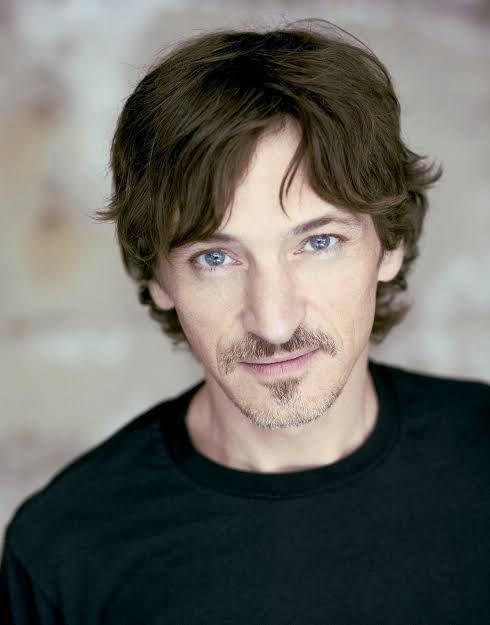
•John Hawkes known as Michael “Bugsy” Moran
A chatty crew member of Andrea Gail.
•Allen Payne known as Alfred Pierre
an immense and kind Jamaican crew member of Andrea Gail.

•Michael Ironside as Bob Brown
the owner of both Andrea Gail and Hannah Boden.

Bob Gunton as Alexander McAnally III
an old, self-centered owner of Mistral.
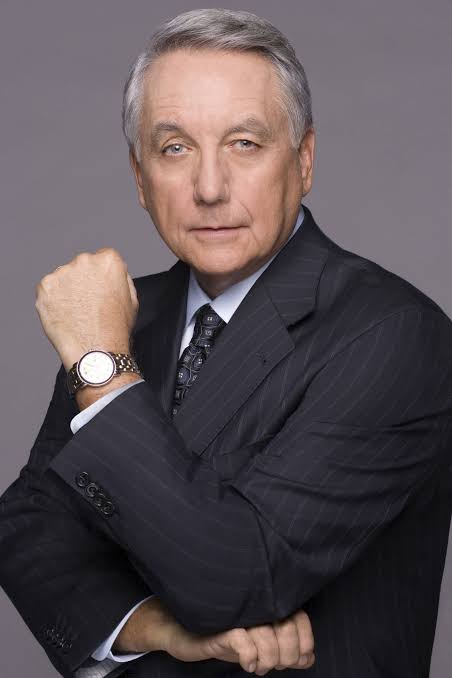
Janet Wright known as Ethel Shatford
Bobby’s mother.
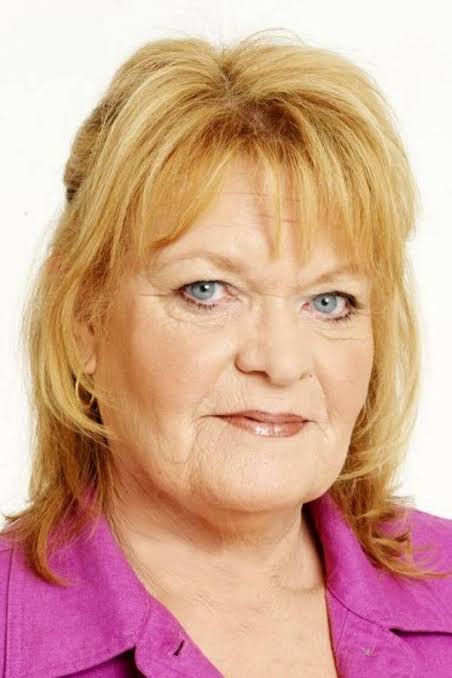
Karen Allen as Melissa Brown
a crew member of Mistral.
Christopher McDonald as Todd Gross
a meteorologist working for the WNEV-TV
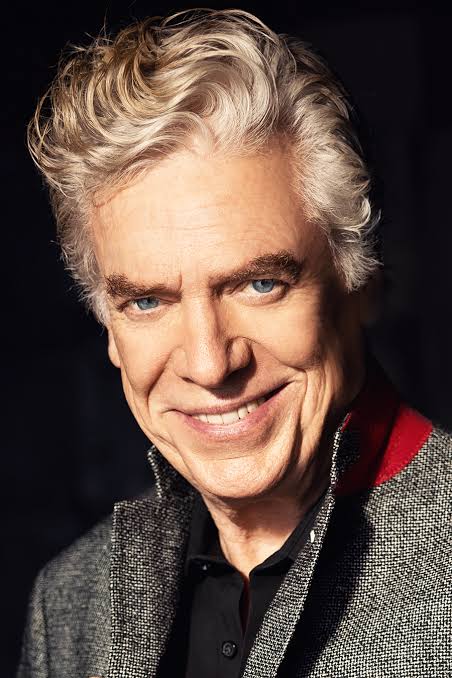
Dash Mihok as Sergeant Jeremy Mitchell
a pararescueman on the New York Air National Guard rescue helicopter.

Wolfgang Petersen
a German film director, film producer and screenwriter. He is best known for making movies that can be best portrayed as part action or disaster movies.

III. SUMMARY
In the winter of 1896, a fishing crew discovered a message in a bottle. The enclosed message was written by the crew of a Gloucester, Massachusetts, fishing boat, the Falcon, just before it sank in a storm. The writer had probably assumed it would never be found.
In Gloucester in September 1991, a man named Bobby Shatford is waking up next to his girlfriend, Chris Cotter, in a room over the Crow’s Nest bar. In a few hours, he’s due aboard the Andrea Gail, a swordfishing boat, for a month-long trip to the Grand Banks, a North Atlantic fishing ground. Bobby has been home for less than a week, and this morning he’s hung over. While in port for brief periods, fishermen like Bobby tend to indulge, drinking heavily and partying late into the night.
Though fisherman on sword boats are sometimes considered the “high rollers of the fishing world”—these boats can bring in big money—some have more pragmatic goals. Bobby started fishing on the Andrea Gail recently to help pay off a child-support debt, in hopes of soon marrying Chris. The Andrea Gail is owned by Bob Brown and captained by Billy Tyne. On this trip, the boat will also be crewed by Bugsy Moran, David Sullivan (Sully), Dale Murphy (Murph), and Alfred Pierre. (After getting a bad feeling, a fisherman named Adam Randall walks off the job at the last minute.) After a day of last-minute provisioning, drinking, and tearful goodbyes, the men board the Andrea Gail for what they hope will be a lucrative trip.
Gloucester’s history in the fishing industry traces back to the 1600s, especially cod and mackerel fishing. Over the past century, fishing has developed rapidly, especially with the advent of ice companies, which allow fresh fish to be quickly transported back to port instead of dried. The market for fresh fish also incentivizes faster, riskier trips and heavier competition among boats. Fishing has always been dangerous, too—the popular fishing ground of the Grand Banks is prone to heavy storms. Not only that, but fishing itself is perilous; a baiter can get accidentally hooked, for example, and pulled overboard before anyone can stop it.
Longline swordfishing became more popular in the 1960s and 1970s, and as fishing technology progressed, fish populations began to decline. In the 1980s, swordfishing began to be regulated more, and by the early 1990s, catch quotas were implemented. This meant that boats were essentially racing each other back to port before the year’s quota was met and the fishing grounds were shut down for the season.
The first half of the Andrea Gail’s trip is fruitless, so Billy Tyne, feeling the urgency of the season’s end, decides they’ll try fishing off the Flemish Cap, east of Newfoundland and far away from the rest of the fleet. Finally, by mid-October, Billy begins to have better luck, and by October 24th, he’s heading back to port with about 40,000 pounds of fish. For some reason, though, he chooses to cut across the tail of the Grand Banks instead of taking the more typical course between Nova Scotia and Sable Island.
Meanwhile, a sailboat called the Satori sets sail with owner Ray Leonard and crew Karen Stimpson and Sue Bylander. About this time, the National Weather Service begins to track an approaching convergence of storms—a hurricane from Bermuda, a Canadian cold front, and a Great Lakes nor’easter are on track to collide right over the Grand Banks. On October 28th, the last report anyone hears from Billy Tyne is, “She’s comin’ on boys, and she’s comin’ on strong.” The following night, nobody can get through to the Andrea Gail.
A number of things could have befallen the Andrea Gail. She might have gotten flipped end over end by monstrous rogue waves, or she might simply have gotten inundated with water. In either case, the crew would have drowned within minutes.
By October 30th, Hurricane Grace and the Canadian high pressure system, spinning in opposite directions, have trapped the nor’easter between them, an effect called a retrograde which is only seen about once a century. Meteorologist Bob Case calls it “the perfect storm.”
On October 29th, the Satori is getting hit badly. Karen Stimpson calls in a mayday, and the next day, a Coast Guard cutter called the Tamaroa arrives to make a rescue attempt. After several failed efforts, a rescue swimmer named Dave Moore helps each crew member into a lift basket dangling from a helicopter, and they all make it back to Boston alive. The same day, owner Bob Brown repeatedly fails to get through to the Andrea Gail and finally reports it to the Coast Guard as missing.
Around the same time, an Air Guard pararescue team—pilot Dave Ruvola, copilot Buschor, flight engineer Jim Mioli, and pararescue jumpers John Spillane and Rick Smith—is dispatched to help a sinking Japanese sailboat. They abort the perilous attempt, and, on their way back to Long Island and lacking an accurate weather forecast, they blunder directly into the massive storm. Unable to complete the necessary midair refueling in these conditions, Ruvola plans an intentional ditching. The Coast Guard airmen who’d just rescued the Satori crew are sent back out to help; the Tamaroa is also rerouted accordingly. The crew ditches in pitch darkness at 9:30 p.m.
John Spillane hits the Atlantic so hard and fast that he’s knocked unconscious and wakes up badly injured. After a couple of hours, he makes his way painfully toward the strobe lights on the suits of Ruvola and Mioli, who’d also ditched successfully. With great difficulty and much danger to his own men, the Tamaroa’s Commander Brudnicki locates and rescues Buschor, then Ruvola, Mioli, and Spillane, who, from injuries and hypothermia, can barely hold onto the safety net. Rick Smith, however, is never found.
By nightfall on October 31st, 15 aircraft are searching desperately for the Andrea Gail. However, after about a week of searching, all that’s ever found are floating fuel barrels and an abandoned, unarmed EPIRB (a distress beacon) off Sable Island. Back in Gloucester, Chris Cotter and other fishermen’s loved ones struggle to come to terms with the deaths—it’s as if the men have simply disappeared. The following spring, Adam Randall, who’d walked off the job on the Andrea Gail, takes a job on a tuna longliner, the Terri Lei, which abruptly and mysteriously sinks off the coast of Charleston, South Carolina.
IV. REVIEW
“The Perfect Storm” is a film directed by Wolfgang Petersen based on the 1997 true-life bestseller by Sebastian Junger. It is an exemplification of a film that catalyzes audience to float over its thrilling scenes. It unfolds the story of the six-man crew of the swordfishing vessel Andrea Gail.
The film was at its best when it introduced the crew of the Andrea Gail, which it did most of the time. It did a good job in presenting the cast and unfurling their characteristics as the story evolves. However, the character interaction which seemed ineffective and impuissant was the petulant quarrel of Murph and Sully. When I watched the film for the first time, I never thought what they were arguing about. Some passages were too unnecessary and does not hit or tick most audience while watching.
The unfortunate events with these six valorous men defying the rough seas in the midst of the fearsome storm manifested some of the movie’s most nail-biting scenes. However, some parts of film gone astray from its original plot. Featuring the Coast Guard saving the three crew members of the Mistral is quite shaky and less compelling since we are not infused with these characters. Some of its scenes could have been cut in order to continue the flow of the story. They build or add much tension but mostly irrelevant.
The music by James Horner has been vital and made a significant change in showing the mood of the film, yet, it is not that striking since most of the time, it was overshadowed by other elements and aspects. There are times when unnecessary sounds play as the characters are talking, making it inaudible for those who are watching especially if without subtitles. The demonstration of lighting—which also contributed highly on the mood and tone of the film—and framing was arranged and done shrewdly. The result was breathtaking as raging seas were made beautiful and terrifying at the same time.
Additionally, the screenplay of William Wittliff was brought to another horizon by Petersen’s direction. Petersen’s prowess in directing has made an astonishing masterpiece, however, as the plot continued to its climax, everything became surreal, which made it more fantastical that drove the film to lack reality. Since this is based on a true story, the credibility of the story was ruined and its history might be twisted into a mistaken idea. It lacks a compelling enthusiastic core, in any case, we cannot deny that its action sequences made a genuine, awe-inspiring spectacle.
V. REACTION
“The Perfect Storm” is good and interesting movies. They are good but not the best tragedy movie I have watched. It worth watching once. The movie started slow and I nearly slept in the first 20 minutes of the movie.
The film were amazing and thrilling since there is a battle between man and nature. It become really good since there are breathtaking waves from the film.
It become more amazing because of the Computer Generated Imagery or CGI and because of the suspenseful parts of the film. Although some of the parts were strange, I did not mind it and just watched the movie. I recommend watching it for those who love to watch tragedy themed movies.
VI. LESSONS LEARNED
“For those of us left behind, the vast unmarked grave which is home for those lost at sea is no consolation. It can’t be visited, there is no headstone on which to rest a bunch of flowers. The only place we can revisit them, is in our hearts, or in our dreams.”
Linda Greenlaw
There is nothing more terrible and upsetting in this world than waiting. They just left us without telling us and it really hurts if we waited for them they did not come.
VII. REFERENCES
The Fragments of the Midnight Mind, The Perfect Storm Film Review from
https://fragmentsofthemidnightmind.home.blog/
The Perfect Storm from
https://drive.google.com/file/d/1yjFqjcY5GP-HEXCS5HqbHwcPLol1qeHt/view?usp=sharing
 Site Title